
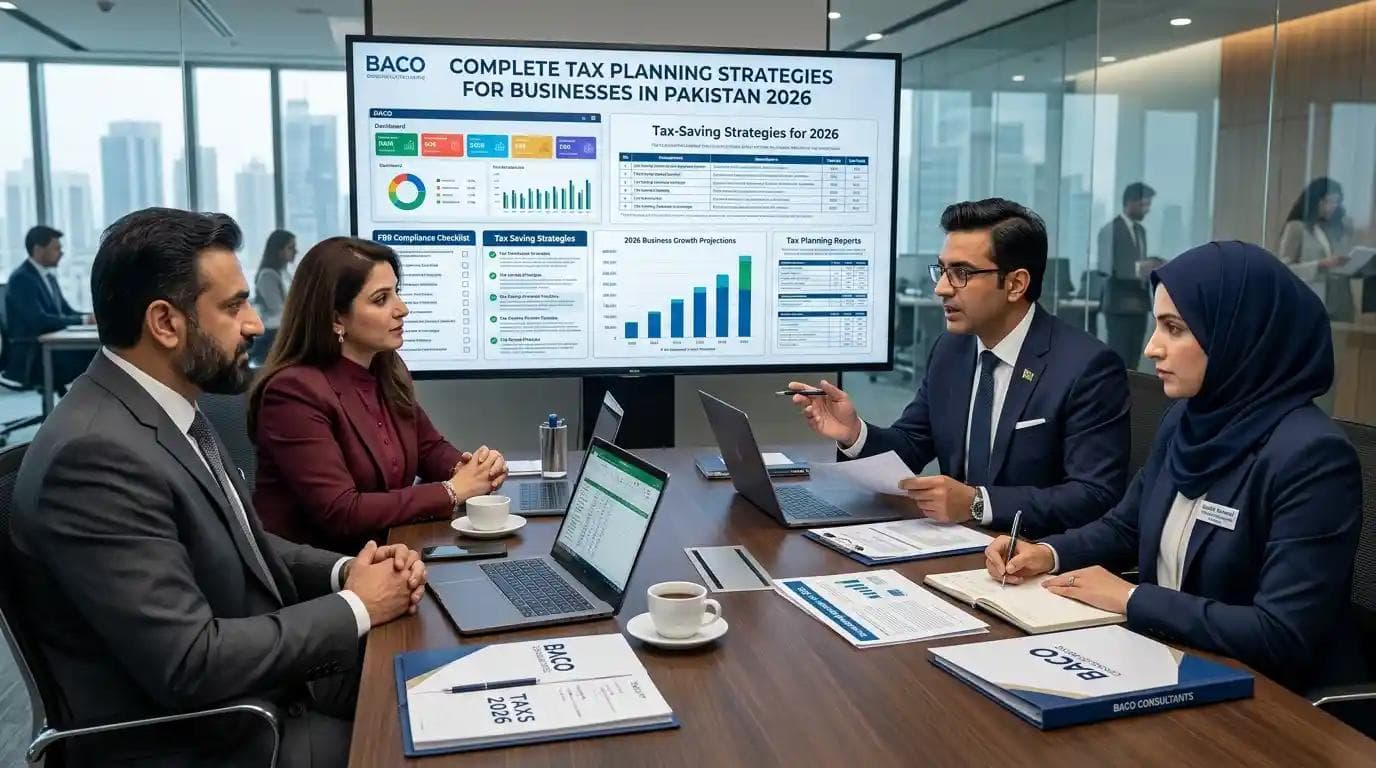
Introduction
Running a business in Pakistan comes with serious financial responsibilities — and taxes are at the top of that list. Yet, many business owners pay far more tax than they legally need to, simply because they don't have a solid tax planning strategy in place.
Tax planning for businesses in Pakistan isn't about finding loopholes or evading obligations. It's about understanding the system, making smart decisions throughout the year, and ensuring your business stays fully compliant with FBR regulations while minimizing unnecessary tax liability.
Whether you run a private limited company, an SME, a startup, or a service-based firm, strategic tax planning can save you significant money — and protect you from costly penalties. This guide walks you through everything you need to know about business tax planning in Pakistan for 2026.
What Is Tax Planning for Businesses in Pakistan?
Tax planning is the process of analyzing your business's financial situation and making decisions that legally reduce your tax liability. It involves choosing the right business structure, timing income and expenses wisely, claiming all available deductions, and ensuring timely compliance with FBR requirements.
Unlike tax evasion — which is illegal — tax planning works entirely within the framework of Pakistan's Income Tax Ordinance 2001 and the Sales Tax Act 1990. It's a proactive approach, not a reactive one.
Good corporate tax planning means you're not scrambling at year-end. You're making informed decisions every month that add up to major savings by the time filing season arrives.
Why Tax Planning Is Critical for Pakistani Businesses in 2026
Pakistan's tax landscape is evolving rapidly. The Federal Board of Revenue (FBR) has significantly expanded its digital infrastructure through the IRIS portal, increased audit activity, and tightened compliance monitoring through the Active Taxpayer List (ATL).
In 2026, businesses that are not on the ATL face higher withholding tax rates on almost every financial transaction — from banking to property purchases to contracts. That's a direct cost to your bottom line.
Beyond compliance, Pakistan offers numerous tax incentives for specific sectors, including IT companies, exporters, SEZs (Special Economic Zones), and startups. Most businesses leave these incentives unclaimed simply due to lack of awareness.
Here's why tax planning matters more than ever in 2026:
- FBR audits are increasingly data-driven and unpredictable
- Non-filers face substantially higher withholding tax rates
- Tax credits and deductions are available but have strict eligibility conditions
- Provincial taxes (PRA, SRB, KPRA, BRA) add another compliance layer
- Penalties for late filing or non-compliance can be severe
If you want to understand your ATL status and how it affects your business, check out this detailed guide on the Active Taxpayer List in Pakistan.
Key Tax Planning Strategies for Businesses in Pakistan
1. Choose the Right Business Structure from the Start
Your business structure directly determines how you're taxed. A sole proprietorship, partnership, AOP (Association of Persons), and private limited company all have different tax rates and compliance requirements.
For example, the corporate tax rate for companies in Pakistan is currently 29% (for banking companies it differs), while AOPs are taxed at progressive rates. For many medium-sized businesses, incorporating as a private limited company through SECP and registering with FBR can actually reduce the overall tax burden when managed correctly.
If you're considering expanding through a joint venture, it's worth reading about joint ventures in Pakistan 2026 to understand the tax implications before you structure the deal.
2. Maintain Accurate and Complete Financial Records
This sounds basic, but poor bookkeeping is the number one reason businesses pay excess tax or face audit complications. If your records are incomplete or inconsistent, you can't claim legitimate deductions, and FBR auditors will have a field day.
Maintain monthly profit and loss statements, keep receipts for all business expenses, and reconcile your accounts regularly. For businesses with inconsistent or missing early records, this resource on incomplete initial records of organisations provides practical guidance.
3. Maximize Allowable Tax Deductions
Under the Income Tax Ordinance 2001, businesses can deduct a wide range of expenses from taxable income. These include:
- Salaries and employee benefits — wages, EOBI contributions, medical allowances
- Rent and utility costs — office and factory premises
- Depreciation — on machinery, vehicles, computers, and equipment
- Finance charges — interest on business loans
- Marketing and advertising — promotional expenses
- Professional fees — accountants, legal advisors, tax consultants
- Travel expenses — business-related travel only
- Bad debts — subject to conditions
Many businesses miss deductions simply because they don't document expenses correctly. Every rupee of legitimate deduction reduces your taxable income directly.
4. Plan Around Withholding Tax Obligations
Withholding tax is one of Pakistan's primary tax collection mechanisms. As a business, you are often both a collector (withholding tax from payments you make) and a payee (having tax withheld from income you receive).
Understanding withholding tax rates on different transaction types — salaries, rent, contracts, imports, dividends — allows you to manage cash flow better and avoid short-payments that attract penalties.
Staying on the Active Taxpayer List ensures you benefit from lower withholding tax rates across the board. Businesses not on the ATL often pay double the withholding tax on common transactions.
5. Claim Available Tax Credits
Pakistan's tax law provides several valuable tax credits that businesses often overlook:
- Tax credit for enlistment — companies that list on the Pakistan Stock Exchange get a 20% tax credit for two years
- Investment tax credit — for plant and machinery under Section 65B
- Tax credit for employment — for hiring new full-time employees
- Credit for donations — to approved charitable institutions under Section 61
- IT sector credits — software exports are largely tax-exempt or taxed at reduced rates
Each of these has eligibility conditions, timelines, and documentation requirements. Missing the window or failing to document properly means losing the benefit entirely.
6. Manage Advance Tax Payments Strategically
Businesses with tax liability above a certain threshold are required to pay advance tax in quarterly installments. Mismanaging advance tax creates two problems: either you overpay and tie up cash unnecessarily, or you underpay and face default surcharge.
Review your estimated annual income mid-year and adjust your advance tax payments accordingly. This is a simple step that protects your cash flow and keeps you compliant.
7. Register for Sales Tax and Manage Input Adjustments
If your business turnover exceeds the FBR threshold, sales tax registration is mandatory. But registered businesses can also claim input tax adjustments — the sales tax paid on purchases used in business can be offset against output tax collected from customers.
Proper sales tax management can significantly reduce your effective tax cost. Failing to claim eligible input tax is simply leaving money on the table. For businesses just getting started with FBR registration, this guide on FBR registration requirements in Pakistan covers everything you need.
8. Use Depreciation and Capital Allowances Wisely
Tax depreciation in Pakistan follows FBR's specified rates, which often differ from accounting depreciation. Timing large asset purchases — especially before year-end — can accelerate depreciation deductions and reduce taxable income for the current year.
For example, purchasing machinery or IT equipment before June 30 means you can claim a full year's depreciation in the current tax year.
9. Plan Salary Structures for Tax Efficiency
For business owners who are also directors or employees of their own companies, how salary is structured matters significantly. A combination of salary, allowances, and dividends can be more tax-efficient than a single large salary, depending on your total income.
Allowances like house rent, medical, and conveyance — within FBR-specified limits — are either fully or partially exempt from tax. Structuring these correctly from day one saves money every month.
10. Prepare for Tax Audits Proactively
FBR selects businesses for audit based on risk parameters, random selection, and third-party data matching. Being audit-ready at all times means:
- Maintaining all supporting documents for at least six years
- Reconciling declared income with bank statements
- Ensuring all withholding tax deductions are deposited on time
- Filing returns accurately without inconsistencies
If you've already received an FBR notice, don't panic — but act fast. Read what to do if you receive an FBR tax notice for a step-by-step guide on how to respond appropriately.
Common Tax Planning Mistakes Businesses Make in Pakistan
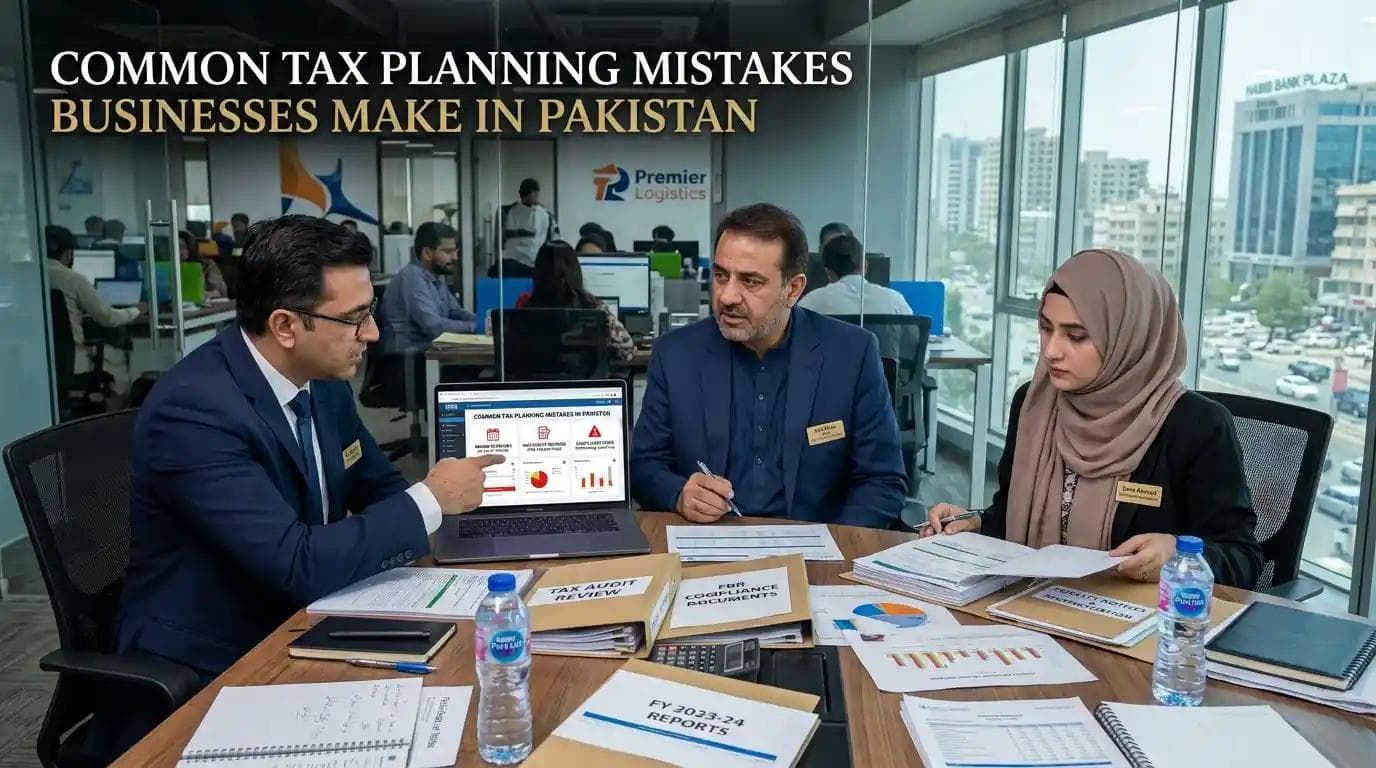
Even experienced business owners fall into predictable traps. Here are the most common ones:
- Filing taxes at the last minute — rushed returns contain errors that invite scrutiny
- Mixing personal and business expenses — this creates accounting chaos and disallows legitimate deductions
- Ignoring provincial tax obligations — PRA, SRB, KPRA, and BRA have separate registration, filing, and compliance requirements
- Not maintaining documentation — verbal agreements or undocumented cash transactions can't be defended in an audit
- Forgetting about advance tax — default surcharge accumulates quickly
- Missing withholding tax deposits — late deposits attract penalties and disallow the expense in certain cases
- Choosing the wrong business structure — changing later is possible but costly and time-consuming
Many of these mistakes can be avoided with consistent guidance from a professional tax advisor throughout the year — not just at filing time.
Why Choose Baco Consultants for Tax Planning in Pakistan
Tax planning is complex, and the rules change frequently. Getting it wrong costs real money — either in excess taxes paid or in penalties for non-compliance.
Baco Consultants is a trusted name in business taxation, company registration, and compliance advisory services in Pakistan. Whether you're a startup navigating your first FBR registration or an established company optimizing your corporate tax strategy, Baco Consultants brings genuine expertise to the table.
Their services include:
- Corporate tax planning and advisory — structuring your business for tax efficiency
- FBR registration and compliance — NTN, sales tax, income tax returns
- Audit support and representation — if FBR comes knocking
- Payroll tax management — withholding on salaries, deposits, and returns
- Business structure advisory — helping you choose between AOP, sole proprietorship, or Pvt Ltd
You can explore the full range of professional business services at Baco Consultants to find exactly the support your business needs. They also provide guidance on legal structures like franchise businesses in Pakistan, which carry specific tax considerations.
Real-World Example: How Tax Planning Saved a Lahore-Based Manufacturing Company
A mid-sized manufacturing company in Lahore with an annual turnover of PKR 80 million was paying approximately PKR 4.2 million in corporate income tax each year. When they engaged a professional tax consultant before the financial year began, the results were significant.
The consultant identified several missed opportunities: unclaimed depreciation on factory machinery, eligible input sales tax adjustments that had never been filed, and a qualifying investment in new equipment that entitled the company to a tax credit under Section 65B.
By restructuring the owner-director's compensation, properly documenting business expenses, and filing a revised advance tax estimate, the company's effective tax liability for the year dropped to PKR 2.7 million — a saving of PKR 1.5 million through entirely legal, compliant strategies.
This is the real-world power of proactive tax planning, not reactive tax filing.
Frequently Asked Questions (FAQs)
What is tax planning for businesses in Pakistan? Tax planning for businesses in Pakistan is the process of legally organizing finances, expenses, and business activities to minimize tax liability while remaining fully compliant with FBR regulations under the Income Tax Ordinance 2001.
How can businesses reduce their taxes legally in Pakistan? Businesses can reduce taxes legally by maximizing allowable deductions, claiming available tax credits, managing advance tax correctly, staying on the Active Taxpayer List, and choosing a tax-efficient business structure from the outset.
What expenses are tax deductible for businesses in Pakistan? Tax deductible expenses include salaries, rent, utilities, depreciation, finance charges, marketing costs, professional fees, and bad debts — provided they are incurred wholly and exclusively for business purposes and are properly documented.
How often should businesses review their tax planning strategy? Ideally, businesses should review their tax planning strategy at least quarterly — and always before major financial decisions like asset purchases, new contracts, or business expansion.
What happens if a business misses the FBR tax filing deadline? Missing the FBR tax return filing deadline results in a default surcharge on unpaid tax, plus a fixed penalty. Repeated non-compliance can trigger audit selection and, in serious cases, prosecution under the Income Tax Ordinance.
What is the corporate tax rate in Pakistan for 2026? The standard corporate income tax rate for companies in Pakistan is 29%. Banking companies are taxed at a higher rate. Small companies meeting specific criteria may qualify for reduced rates. Tax credits and exemptions can further reduce the effective rate.
Conclusion: Start Your Tax Planning Today
Tax planning is not a year-end exercise — it's a year-round discipline. The businesses that pay the least tax legally are not the ones who scramble in June. They're the ones who make deliberate, informed decisions every month with the guidance of experienced professionals.
Pakistan's tax environment in 2026 is more demanding than ever, but it also offers more opportunities for legitimate tax optimization than most business owners realize. From investment credits to sector-specific exemptions to smart salary structuring, the tools are available — you just need to know how to use them.
If you need professional assistance with tax planning, corporate tax compliance, FBR registration, or audit representation in Pakistan, Baco Consultants is ready to help you every step of the way. Their team of experienced tax advisors works with businesses across Karachi, Lahore, Islamabad, Rawalpindi, and beyond.
Book a consultation with Baco Consultants today and take control of your business tax strategy before the next filing season arrives.
Related Articles


Leave a Comment
No approved comments yet. Be the first to share your thoughts!