
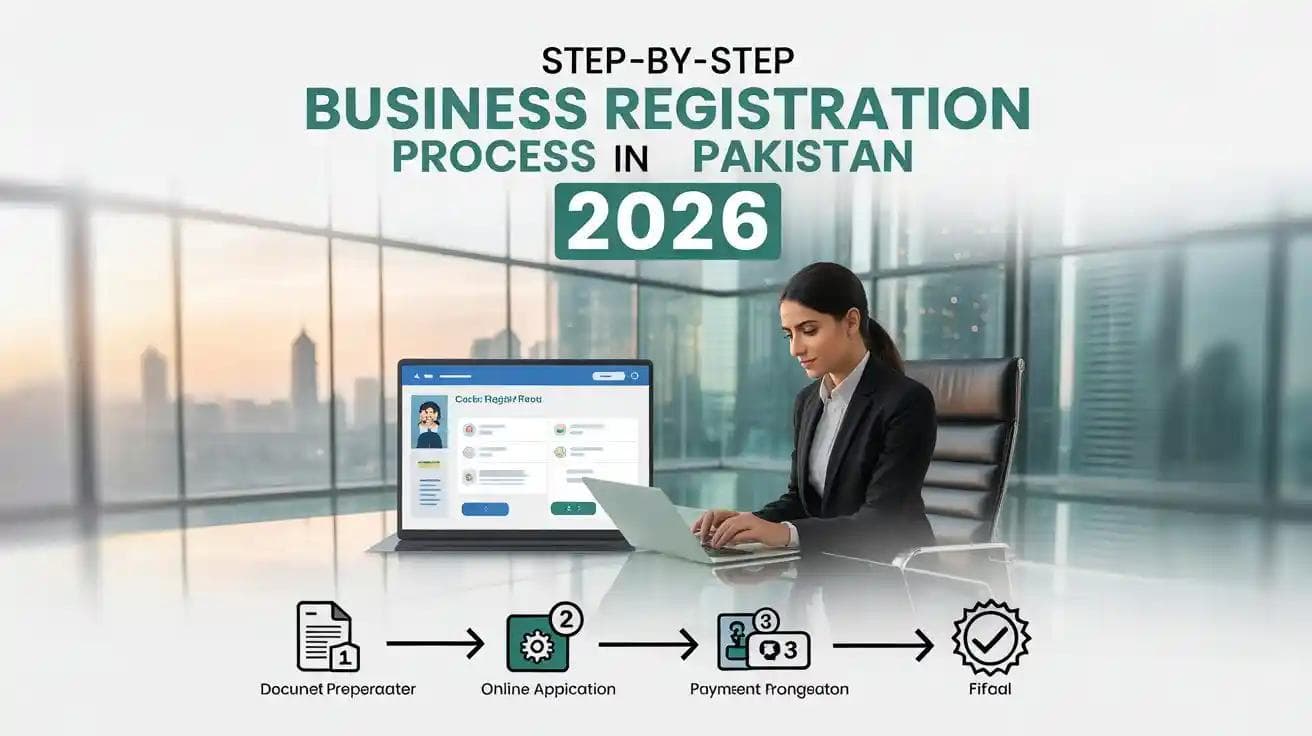
Starting a business in Pakistan is one of the most exciting decisions you can make — but doing it the right way matters more than ever in 2026. The legal landscape has evolved, online systems have improved, and the government has made it easier (though still detailed) to register your business properly.
Whether you're launching a small sole proprietorship in Lahore, registering a private limited company in Karachi, or setting up a startup in Islamabad, this guide walks you through every step. From SECP registration to FBR NTN enrollment, you'll find everything you need right here.
What Is Business Registration in Pakistan?
Business registration in Pakistan is the formal legal process of recognizing your business entity under Pakistani law. Depending on your business structure, this involves filing with the Securities and Exchange Commission of Pakistan (SECP) and/or registering your business with the Federal Board of Revenue (FBR) for tax purposes.
In simple terms: it's how the government officially recognizes your business as a legal entity, giving it the right to operate, open bank accounts, sign contracts, file taxes, and protect its name.
There are three primary business structures most entrepreneurs choose from:
- Sole Proprietorship — a single-owner business, registered through local authorities and the FBR
- Partnership Firm — two or more partners, registered with SECP or provincial authorities
- Private Limited Company (Pvt. Ltd.) — the most formal and recommended structure, registered with SECP
Why Business Registration Is Important in Pakistan
Running an unregistered business in 2026 is not just legally risky — it's practically limiting. Here's why getting registered is non-negotiable:
Legal Protection. Once your business is registered, you gain legal standing. You can sign contracts, open business bank accounts, hire employees formally, and take legal action if needed.
Tax Compliance. Pakistan's FBR has significantly tightened enforcement. An NTN (National Tax Number) is required for virtually every financial transaction — from opening a business bank account to applying for government contracts. Without FBR registration, you're also excluded from the Active Taxpayer List (ATL), which affects your withholding tax rates dramatically.
Access to Funding. Banks, investors, and government schemes (including the Pakistan Startup Fund) require proof of legal business registration before extending any financing or grants.
Business Credibility. A registered business signals professionalism. Clients — especially corporate and international ones — are far more likely to work with a registered entity.
According to the SECP eServices portal, company incorporations in Pakistan have been rising year over year, reflecting growing entrepreneurial confidence and a push toward formal business operations.
Types of Business Structures in Pakistan: Which One Is Right for You?
Before you begin the registration process, you need to choose the right legal structure. Here's a quick comparison:
| Structure | Best For | Registration Authority |
|---|---|---|
| Sole Proprietorship | Freelancers, small retailers | FBR + Local Chamber |
| Partnership Firm | Small businesses with partners | SECP / Provincial |
| Private Limited Company | Startups, scalable businesses | SECP |
| Single Member Company (SMC) | Solo entrepreneurs wanting corporate status | SECP |
For most startups and growing businesses in Pakistan, a Private Limited Company is the recommended structure. It limits personal liability, allows multiple shareholders, and is far easier to scale or seek investment.
Key Requirements and Documents for Business Registration in Pakistan
Before submitting anything, gather these documents:
For Sole Proprietorship:
- Copy of CNIC (Computerized National Identity Card)
- Business name and address proof
- NTN registration via FBR Iris
For Partnership Firm:
- Partnership Deed (signed by all partners)
- CNICs of all partners
- Business address proof
For Private Limited Company (SECP):
- Proposed company name (2–3 options)
- CNICs of all directors and shareholders
- Memorandum of Association (MoA)
- Articles of Association (AoA)
- Registered office address
- Digital signatures (obtained from NIFT or similar authorized body)
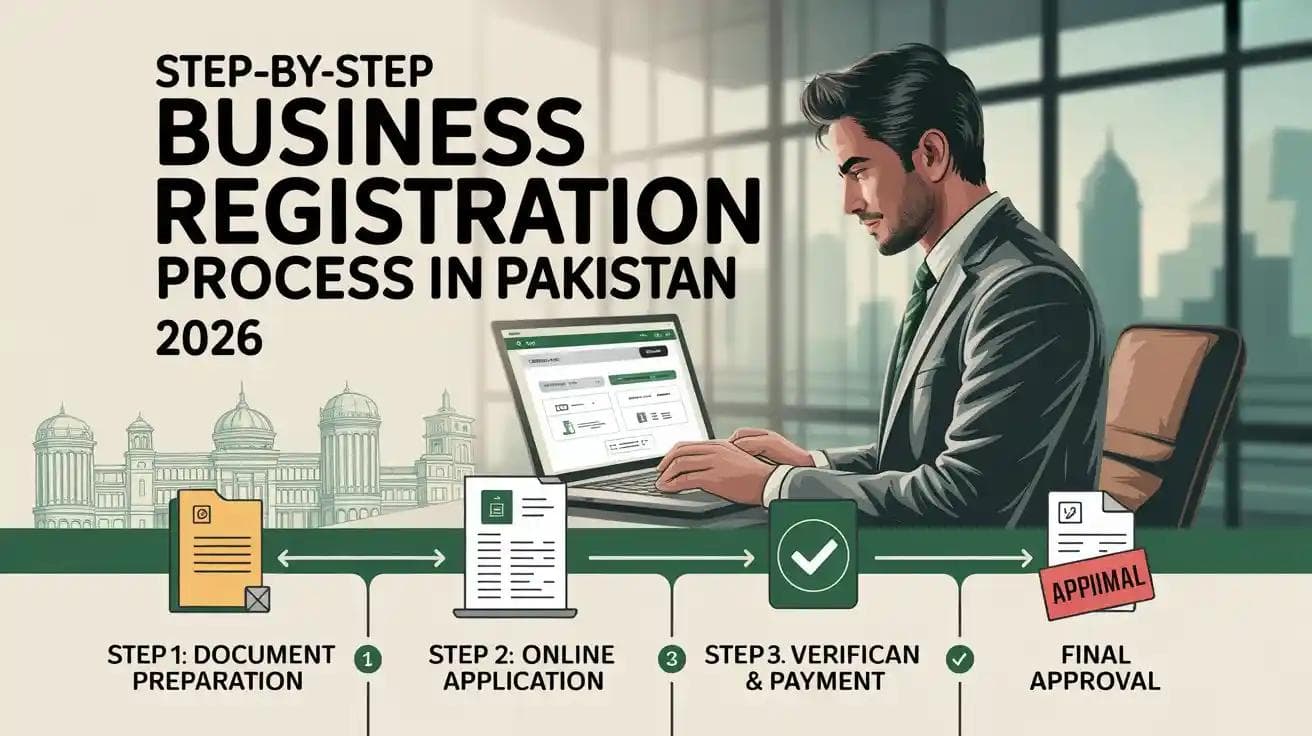
Step-by-Step Business Registration Process in Pakistan 2026
Here is the complete, step-by-step guide to registering your business legally in Pakistan.
Step 1: Choose Your Business Structure
Decide whether you want a sole proprietorship, partnership, or private limited company. This decision affects your tax obligations, liability, and future growth potential. If you're unsure, consulting a business advisor — like the team at Baco Consultants — can save you time and costly mistakes.
Step 2: Reserve Your Company Name (SECP — For Companies)
Go to the SECP eServices portal and search for your desired business name. SECP will check if the name is available and compliant with the Companies Act 2017. You can submit 2–3 name options in order of preference.
Name approval typically takes 1–3 working days.
Step 3: Prepare Your Incorporation Documents
Draft your Memorandum of Association (MoA) and Articles of Association (AoA). These are the foundational legal documents for your company. SECP provides standard templates, but customizing them to your business type is strongly recommended.
Step 4: Register on SECP eServices Portal
Create an account on the SECP eServices portal. Upload your documents digitally. You'll need a digital signature for this step — obtainable from NIFT Pakistan or other authorized certification authorities.
Step 5: Pay SECP Registration Fees
SECP charges a registration fee based on your company's authorized share capital. For example:
- Companies with capital up to PKR 100,000: approximately PKR 1,000–3,500
- Higher capital amounts attract higher fees (SECP's fee calculator on their portal provides exact figures)
Payment can be made online via the portal.
Step 6: Submit Your Application
Once all documents are uploaded and fees are paid, submit your application. SECP usually processes private limited company registrations within 3–5 working days through the online system. Upon approval, you receive:
- Certificate of Incorporation
- Company Registration Number
Step 7: Register for NTN with FBR (Tax Registration)
After incorporation, your next step is FBR registration to get your National Tax Number (NTN). This is done through the FBR Iris portal (https://iris.fbr.gov.pk/).
Steps for FBR NTN Registration:
- Visit the Iris FBR portal and click "Registration for Unregistered Person"
- Enter your CNIC and mobile number to receive a verification code
- Log in and complete your taxpayer profile
- Add business details, income sources, and bank account information
- Submit — your NTN is typically issued within 24–48 hours
For companies, you'll register separately for corporate NTN using the Certificate of Incorporation.
Step 8: Register for Sales Tax (If Applicable)
If your annual turnover exceeds PKR 10 million (or you're in a sector requiring it), you must also register for GST (General Sales Tax) with FBR. This is also done through the Iris portal.
Step 9: Open a Business Bank Account
With your Certificate of Incorporation and NTN in hand, visit your preferred bank to open a business bank account. Most banks in Pakistan require both documents before opening a corporate account.
Step 10: Register with the Chamber of Commerce (Optional but Recommended)
Registering with your local Chamber of Commerce and Industry (such as LCCI in Lahore or KCCI in Karachi) gives your business additional credibility and access to trade opportunities, training, and networking events.

Cost of Business Registration in Pakistan 2026
Here's a realistic breakdown of what you might spend:
| Item | Approximate Cost (PKR) |
|---|---|
| SECP Company Registration Fee | 1,000 – 25,000+ (based on capital) |
| Digital Signature | 2,000 – 5,000 |
| MoA/AoA Drafting (professional) | 5,000 – 15,000 |
| FBR NTN Registration | Free |
| Chamber of Commerce Registration | 3,000 – 10,000 |
| Professional Consultant Fee | 10,000 – 30,000 |
Total estimated cost for a private limited company: PKR 20,000–80,000, depending on whether you hire a professional consultant.
Common Mistakes to Avoid During Business Registration
Even experienced entrepreneurs make avoidable errors. Watch out for these:
1. Choosing the Wrong Business Structure. Registering as a sole proprietorship when you actually need corporate liability protection can cost you dearly later. Think long-term.
2. Incorrect or Incomplete Documents. Missing signatures, incorrect CNIC copies, or improperly drafted MoA/AoA are the top reasons SECP rejects applications. Double-check everything.
3. Skipping FBR Registration. Many businesses focus on SECP and forget FBR. Without your NTN, you can't legally operate, invoice clients, or file taxes.
4. Not Registering a Unique Business Name. Failing to check name availability before investing in branding is a costly mistake. Always run an SECP name check first.
5. Using the Wrong Registered Office Address. SECP correspondence goes to your registered address. Using an address where you don't actually operate can lead to missed notices.
6. Ignoring Post-Registration Compliance. Company registration is just the beginning. Annual returns, audit filings, and SECP compliance are ongoing obligations under the Companies Act 2017.
Why Choose Baco Consultants for Business Registration in Pakistan
Navigating Pakistan's registration system — with its multiple portals, legal documents, and compliance requirements — can be genuinely overwhelming, especially if it's your first time.
That's where Baco Consultants comes in.
Baco Consultants is a trusted business registration and compliance firm in Pakistan, helping entrepreneurs, startups, and established businesses get registered quickly and correctly. Their team of expert consultants handles everything from SECP company incorporation to FBR NTN registration and ongoing tax compliance.
Here's why clients trust them:
- Expert Consultants with in-depth knowledge of SECP, FBR, and Pakistan's Companies Act 2017
- Fast Processing — they handle submissions efficiently, reducing approval time
- Professional Guidance at every stage, from choosing a business structure to post-incorporation compliance
- Affordable Service Packages tailored for startups, SMEs, and larger companies
- Extensive Experience with both FBR and SECP systems, including digital signature setup
You can explore their full range of services, learn more about their team, or get in touch directly to discuss your specific needs.
They also publish helpful articles and guides on their blog, making them a go-to resource for Pakistani entrepreneurs who want to stay compliant and informed.

Real-World Example: How Ali Registered His Tech Startup in Islamabad
Ali, a software engineer based in Islamabad, wanted to turn his freelance web development work into a proper business. He had a client offering a long-term contract — but the client required a registered company with an NTN.
Ali reached out to Baco Consultants, who helped him:
- Choose a Private Limited Company structure (instead of sole proprietorship, which would have limited his ability to add a co-founder later)
- Reserve a business name through SECP within 2 days
- Prepare and file all incorporation documents
- Get his NTN from FBR within 48 hours of incorporation
The entire process, from first consultation to receiving his Certificate of Incorporation, took under two weeks. Ali secured his contract, opened a business bank account, and is now operating fully legally — with Baco handling his annual SECP filings too.
For entrepreneurs like Ali, professional guidance doesn't just save time — it can mean the difference between getting a major client and losing them.
Frequently Asked Questions (FAQs)
Q1: How long does it take to register a company in Pakistan? A: Online SECP registration for a private limited company typically takes 3–7 working days after all documents are submitted correctly. NTN registration with FBR takes an additional 24–48 hours.
Q2: What documents are required for SECP company registration in Pakistan? A: You need CNICs of all directors, proposed company name, Memorandum and Articles of Association, registered office address, and a digital signature. Additional documents may be required based on business type.
Q3: Can I register a company online in Pakistan? A: Yes. SECP's eServices portal allows fully online company registration. FBR NTN registration is also done online via the Iris portal. Physical visits are rarely required.
Q4: Is NTN required for every business in Pakistan? A: Yes. Every business operating in Pakistan must have a National Tax Number (NTN) issued by FBR. Without it, you cannot legally invoice clients, open a business bank account, or file tax returns.
Q5: What is the cost of registering a private limited company in Pakistan in 2026? A: SECP fees alone range from PKR 1,000 to PKR 25,000+ depending on your authorized capital. With professional assistance, total costs typically range from PKR 20,000 to PKR 80,000.
Q6: Which business structure is best for startups in Pakistan? A: A Private Limited Company (Pvt. Ltd.) is generally the best choice for startups. It limits personal liability, allows equity sharing with investors, and presents a more credible image to clients and partners.
Conclusion: Register Your Business the Right Way in 2026
Getting your business registered in Pakistan in 2026 is more accessible than ever — but it still requires careful attention to detail, the right documents, and an understanding of both SECP and FBR requirements. Cutting corners or delaying registration can cost you clients, funding opportunities, and legal protection.
The good news? You don't have to figure it all out alone.
If you need professional assistance with company registration, NTN enrollment, SECP compliance, or business taxation in Pakistan, Baco Consultants is here to guide you every step of the way.
Whether you're a first-time entrepreneur or a growing business looking to formalize operations, their expert team makes the process smooth, fast, and stress-free.
👉 Contact Baco Consultants today and book a consultation. Take the first step toward building a legally sound, professionally managed business in Pakistan.
For additional resources on business tools and digital services in Pakistan, you can also explore MegaFreeTools for useful online utilities, or check out ICT.net.pk and their professional courses to upskill your team in business and technology.
Related Articles


Leave a Comment
No approved comments yet. Be the first to share your thoughts!