

Introduction
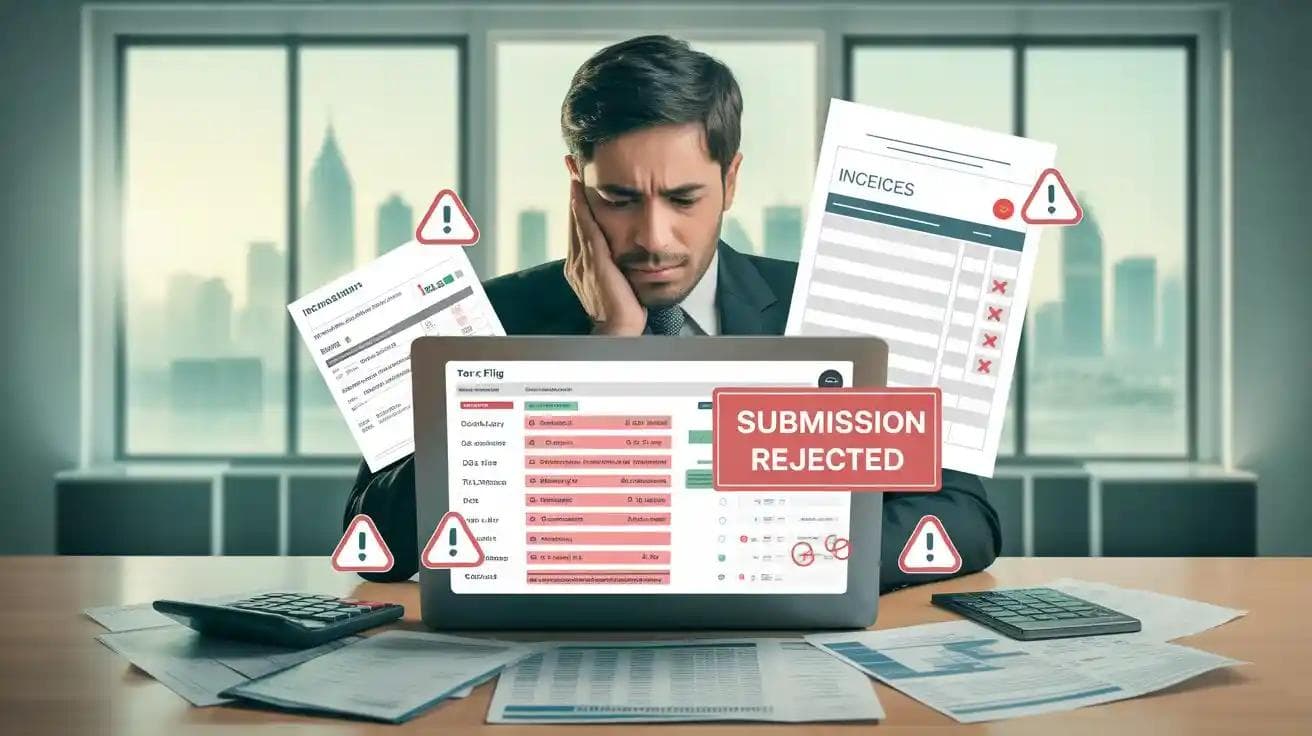
Sales tax filing in Pakistan sounds straightforward on paper. In reality, it trips up thousands of businesses every year — from small retailers in Lahore to established manufacturers in Karachi. The Federal Board of Revenue (FBR) has strict compliance requirements, and even a minor mistake can trigger penalties, audits, or outright rejection of your return.
With the IRIS portal becoming the primary platform for all tax-related submissions, the margin for error has shrunk. Yet the number of businesses making avoidable mistakes continues to rise in 2026.
Whether you are a startup owner, an accountant, or a freelancer handling your own books, understanding the most common errors in sales tax filing in Pakistan is the first step toward staying compliant and penalty-free. This guide breaks everything down clearly so you can file with confidence.
What Is Sales Tax Filing in Pakistan?
Sales tax filing is the process of submitting your monthly or periodic sales tax return to the FBR through the IRIS portal. Under the Sales Tax Act 1990, every registered business — whether a manufacturer, retailer, importer, or service provider — is required to declare their output tax (collected from customers) and input tax (paid on purchases), calculate the net tax liability, and submit the return along with payment by the due date.
The return includes several annexures that detail your sales, purchases, invoices, and adjustments. A correctly filed return reflects accurate figures, matched invoices, and verified registration numbers. Any mismatch or omission in this process leads to discrepancies that FBR systems can flag automatically.
Why Sales Tax Compliance Matters for Pakistani Businesses
For most business owners in Pakistan, sales tax filing feels like a bureaucratic burden. But non-compliance carries very real financial and legal consequences.
FBR has significantly upgraded its digital infrastructure. The IRIS portal now cross-matches data in real time — comparing your return with your suppliers' returns, verifying STRN numbers, and flagging invoice mismatches automatically.
If your return contains errors, you could face:
- Financial penalties for incorrect or late filing
- Disallowance of input tax claims, which increases your tax burden
- Sales tax audit by FBR, which is time-consuming and costly
- Blacklisting of your STRN in serious cases
- Business disruption due to compliance issues
For businesses operating in cities like Islamabad, Karachi, Lahore, and Rawalpindi, staying on top of FBR's compliance requirements is not optional — it is a business necessity.

Key Requirements Before Filing Sales Tax Returns
Before you even open the IRIS portal, make sure you have the following in order:
- Valid STRN (Sales Tax Registration Number) — active and not suspended
- NTN (National Tax Number) — correctly registered with FBR
- Sales invoices — serially numbered, containing buyer CNIC or NTN, and STRN
- Purchase invoices — from FBR-registered suppliers with valid STRNs
- Bank payment challans (CPR) — for tax payments made before submission
- Reconciled accounts — matching your sales, purchases, and tax amounts
- Correct tax period — monthly returns cover the exact calendar month
- Annexures completed — including Annexure A (purchases), Annexure C (sales), and others as applicable
Missing any of these before filing is the root cause of most sales tax filing errors in Pakistan.
Common Errors in Sales Tax Filing in Pakistan 2026
This is the core of what you need to know. Below are the most frequent and impactful mistakes businesses make — and how to avoid them.
1. Incorrect or Mismatched Invoice Data
One of the most common sales tax filing mistakes in Pakistan is entering invoice information that does not match the supplier's data in the FBR system. When your purchase invoice details do not align with what your supplier has declared, the system flags it as a mismatch.
This can result in disallowance of your input tax — meaning you end up paying more tax than you should.
How to avoid it: Always verify your supplier's STRN is active before recording a purchase. Use the FBR's online verification tool to cross-check before finalizing your annexures.
2. Wrong Tax Period Selection
Selecting the incorrect tax period is a surprisingly common technical error in the IRIS portal. Filing a March return for February's data, for instance, creates a mismatch that is hard to fix after submission.
How to avoid it: Double-check the tax period at the top of every return before proceeding. Each monthly return should cover exactly one calendar month.
3. Incorrect Input Tax Calculation
Many businesses, especially smaller ones, make errors in calculating eligible input tax. Not all input tax is claimable — purchases used for exempt supplies, personal use, or non-business purposes are not eligible for adjustment.
Overclaiming input tax is one of the most common audit triggers in Pakistan's sales tax system.
How to avoid it: Maintain a clear separation between business and personal expenses. Consult with a tax professional to determine which input tax is genuinely claimable under the Sales Tax Act 1990.
4. Invalid or Unverified STRN Numbers
Using an incorrect or suspended STRN — either your own or a supplier's — leads to immediate errors during filing. The IRIS system validates STRNs automatically, and any invalid number causes rejection of the relevant entry.
How to avoid it: Before adding any supplier to your records, verify their STRN status through FBR's online sales tax verification tool. Also confirm your own STRN is active before filing.
5. CNIC and NTN Mismatch
Another frequent issue is a mismatch between the CNIC (Computerized National Identity Card) and NTN registered in FBR's database. If your NTN was registered with old CNIC data or if there has been a name discrepancy, the return may be rejected or flagged.
How to avoid it: Ensure your registration data with FBR is current and consistent. Any changes to your CNIC or personal information should be updated in IRIS promptly.
6. Missing or Incomplete Annexures
Sales tax returns in Pakistan require several annexures. Submitting a return without completing the required annexures — or leaving critical fields blank — results in an incomplete return that FBR may treat as non-compliant.
How to avoid it: Go through each annexure carefully before submission. Annexure A covers purchases, Annexure C covers sales, and other schedules handle specific categories. Use the FBR's official checklist to verify completeness.
7. Errors in Sales Tax Challan (CPR) Entry
The CPR (Computerized Payment Receipt) must be correctly entered into the return. If the challan number, payment date, or amount does not match FBR's payment records, the return will show outstanding tax liability even if you have already paid.
How to avoid it: Cross-verify your CPR details on FBR's e-payment portal before entering them into IRIS. Keep digital copies of all payment confirmations.
8. Late Filing Without Extension Awareness
Missing the monthly filing deadline — typically the 18th of the following month for most taxpayers — attracts automatic penalties. Many small businesses are unaware that FBR occasionally grants deadline extensions, and they either file late unnecessarily or miss extensions they could have used.
How to avoid it: Subscribe to FBR notifications and follow official FBR announcements for deadline extensions. Set internal reminders at least a week before each due date.
9. Failure to Revise Errors After Submission
Some taxpayers do not realize they can revise a submitted sales tax return through IRIS within a specific window. Many errors go uncorrected simply because the filer was unaware of the revision option — leading to compounding discrepancies over time.
How to avoid it: If you identify an error after submission, log into IRIS and use the revision feature promptly. Be aware that revisions after FBR initiates audit proceedings may require formal approval.
10. Session Timeout and Technical Errors on IRIS
The IRIS portal has been known to time out during filing, causing data loss or incomplete submissions. Some users close the browser assuming the return was submitted, only to find it was never received.
How to avoid it: Work on your return offline using the downloaded forms where possible. Always check the confirmation screen and save the submission acknowledgment number as proof.
Why Choose Baco Consultants for Sales Tax Filing
Navigating sales tax compliance in Pakistan requires more than just knowing the rules — it requires staying current with FBR's evolving systems, deadlines, and enforcement patterns. That is where professional guidance makes all the difference.
Baco Consultants is a trusted name in Pakistan's taxation and business compliance space. Their team of experienced professionals helps businesses across Karachi, Lahore, Islamabad, and beyond handle everything from STRN registration to monthly return filing and audit representation.
Here is what sets Baco Consultants apart:
- Expert tax consultants with deep FBR knowledge and hands-on IRIS experience
- Fast, accurate processing so your returns are filed before deadlines
- End-to-end compliance management — from registration to filing to audit support
- Affordable service packages suited to small businesses, startups, and large corporations alike
- Transparent communication — you are kept informed at every step
You can explore their full range of taxation and compliance services or learn more about the experienced team behind their results. For businesses looking to understand how they work, the about page provides a clear picture of their approach and values.
Baco Consultants also publishes regular updates and practical guides on their blog, making it easy to stay informed about FBR changes and new compliance requirements.
Real-World Example
Consider a mid-sized textile manufacturer in Faisalabad filing their monthly sales tax return for March 2026. They purchase raw materials from three suppliers and sell finished fabric to buyers nationwide.
During filing, they enter input tax from a supplier whose STRN had been suspended by FBR the previous month — a fact they were unaware of. The IRIS system rejects the input tax claim for that supplier, reducing their claimable input tax and increasing their net tax liability significantly.
On top of that, they had selected the wrong tax period — entering April instead of March — which created a compliance gap for March and a duplication issue for April.
When they engaged Baco Consultants, the team identified both errors, filed a revised return for the correct period, and guided the client through verifying all supplier STRNs before future submissions. The result: a clean compliance record and no penalties.
This type of situation is far more common than most businesses realize — and it is entirely preventable with the right support.
Frequently Asked Questions (FAQs)
What are the most common sales tax filing errors in Pakistan? The most common errors include invoice mismatches, incorrect tax period selection, invalid STRN numbers, overclaimed input tax, missing annexures, and incorrect CPR entry. Each of these can result in return rejection or FBR penalties.
Why does FBR reject sales tax returns? FBR typically rejects sales tax returns due to STRN mismatches, unverified supplier registrations, incorrect or missing annexures, invoice discrepancies, or incomplete payment information. The IRIS system automatically flags these issues.
How can I correct a mistake in my submitted sales tax return in Pakistan? You can revise a submitted sales tax return through the IRIS portal within the allowed revision window. Log in, locate the filed return, and use the revision option to correct errors. For complex corrections, consulting a tax professional is advisable.
What is the penalty for incorrect sales tax filing in Pakistan? Under the Sales Tax Act 1990, penalties for incorrect filing can include a fixed penalty per return, default surcharge on unpaid tax, and additional fines if the error is found during an audit. Persistent non-compliance can lead to STRN suspension.
How do I avoid input tax adjustment errors in my sales tax return? Only claim input tax on purchases from FBR-registered suppliers with active STRNs. Verify invoices carefully, exclude non-business expenses, and reconcile your purchase records with supplier declarations on IRIS.
Can I edit a submitted sales tax return in IRIS? Yes, IRIS allows revision of submitted sales tax returns within a defined period, typically before the tax year is closed or before audit proceedings begin. Always act quickly if you spot an error, as the revision window is limited.
Conclusion and Call to Action
Sales tax filing in Pakistan in 2026 is a process that demands accuracy, awareness, and consistency. The IRIS portal has made the process more transparent — but it has also made errors easier for FBR to detect. From invalid STRN numbers and invoice mismatches to wrong period selection and incomplete annexures, the mistakes covered in this guide are entirely avoidable with the right preparation and professional support.
Whether you are a business owner managing your own compliance or an accountant handling multiple clients, staying informed about common sales tax filing mistakes is one of the most valuable investments you can make in your financial health.
If you need professional help with sales tax return filing, error correction, or FBR compliance in Pakistan, Baco Consultants is ready to assist. Their team handles everything with expertise, speed, and transparency — so you can focus on growing your business while they handle the compliance.
Book a consultation with Baco Consultants today and file your sales tax returns with confidence.
Related Articles


Leave a Comment
No approved comments yet. Be the first to share your thoughts!